
AC Not Cooling? 7 Things to Check Before You Call for Repair
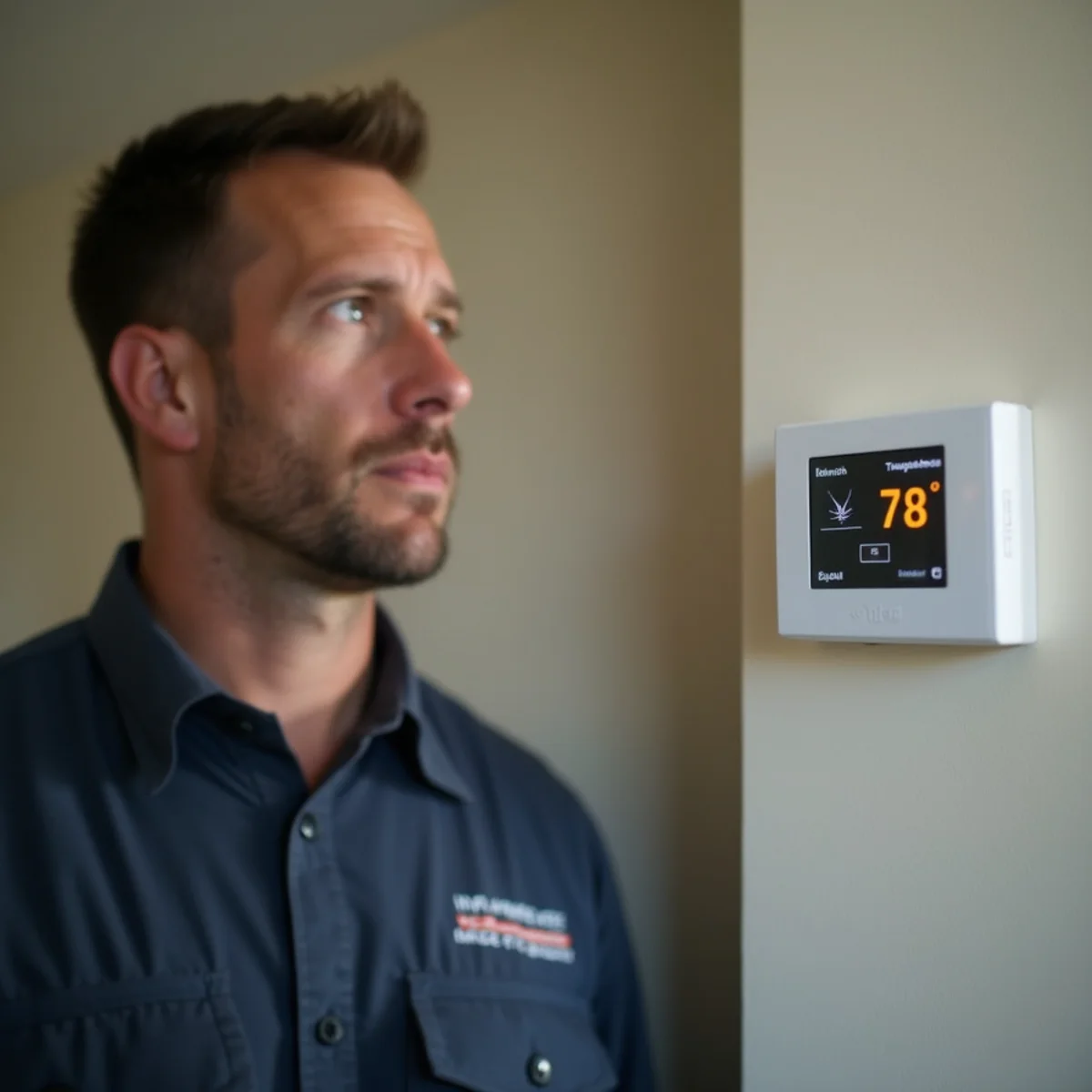
1. Verify Thermostat Mode and Fan Setting
It sounds obvious, but a surprising percentage of emergency 'no cooling' calls across Harnett County involve accidental thermostat setting changes following a thunderstorm power blip or household adjustments. Ensure the system switch is set firmly to 'COOL' and that the target temperature is set at least 3 to 5 degrees below the current room temperature.
Next, pay close attention to the fan setting. If set to 'ON,' the indoor blower fan runs 24 hours a day even when the outdoor compressor has cycled off, blowing warm, humid unconditioned air through your supply registers. Always switch the fan setting to 'AUTO' so the blower only circulates air while active refrigeration is taking place.
- Confirm system switch is set to 'COOL' rather than 'HEAT' or 'OFF.'
- Set target temperature 3°F below room temperature to force a call for cooling.
- Set blower fan to 'AUTO' rather than 'ON' to prevent recirculating humid air.
- Replace weak AA/AAA thermostat batteries if the display appears faded or unresponsive.
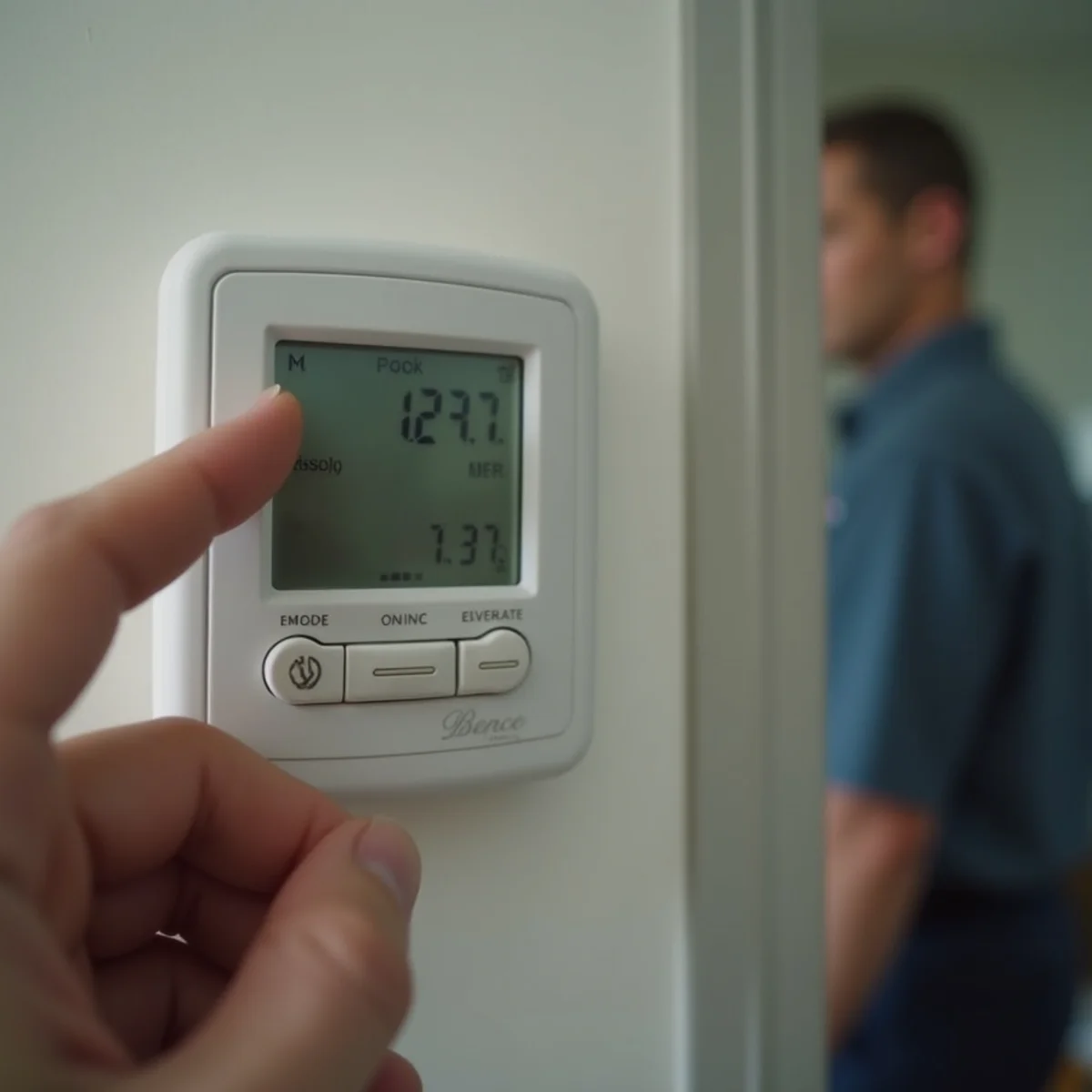
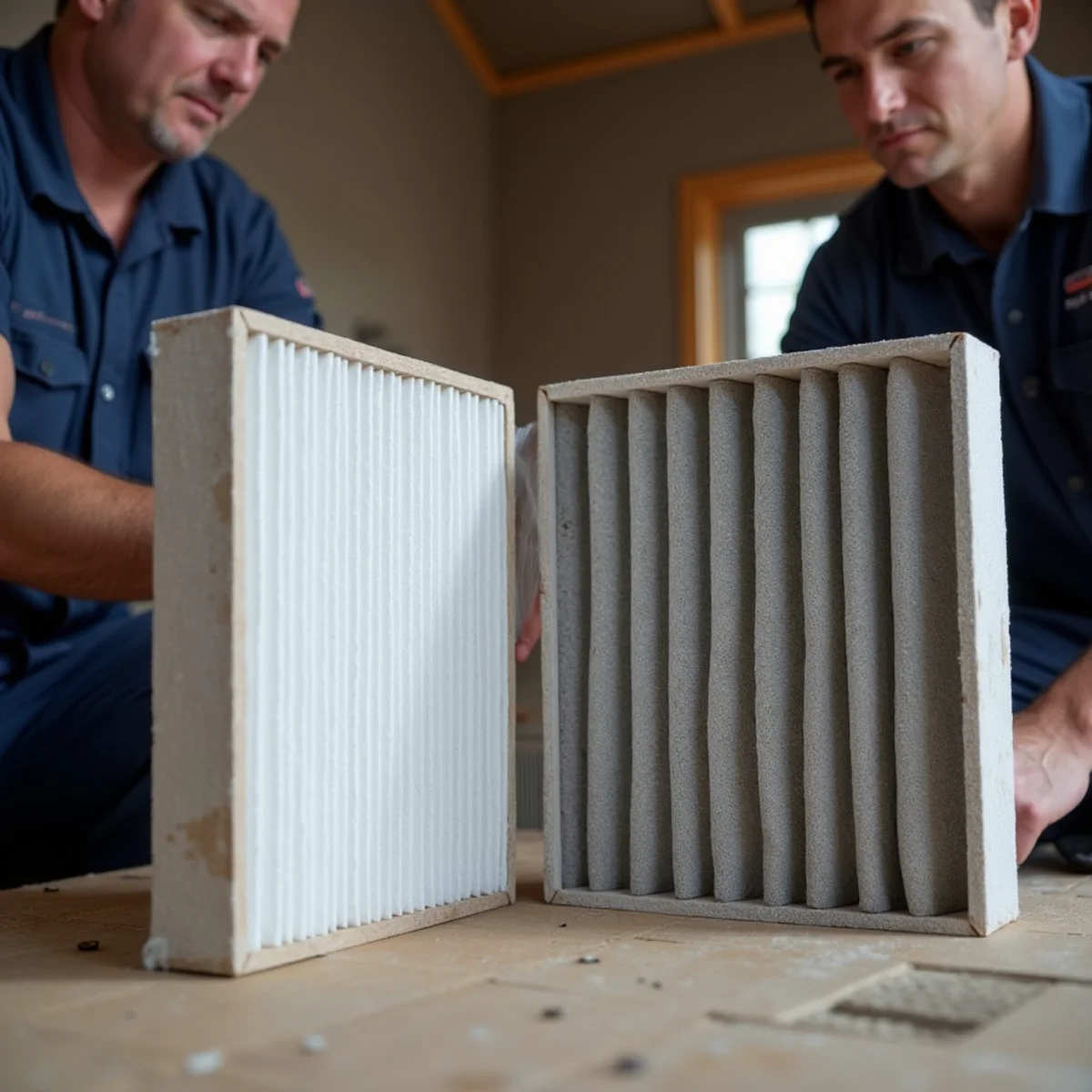
2. Inspect Your Air Filter for Airflow Suffocation
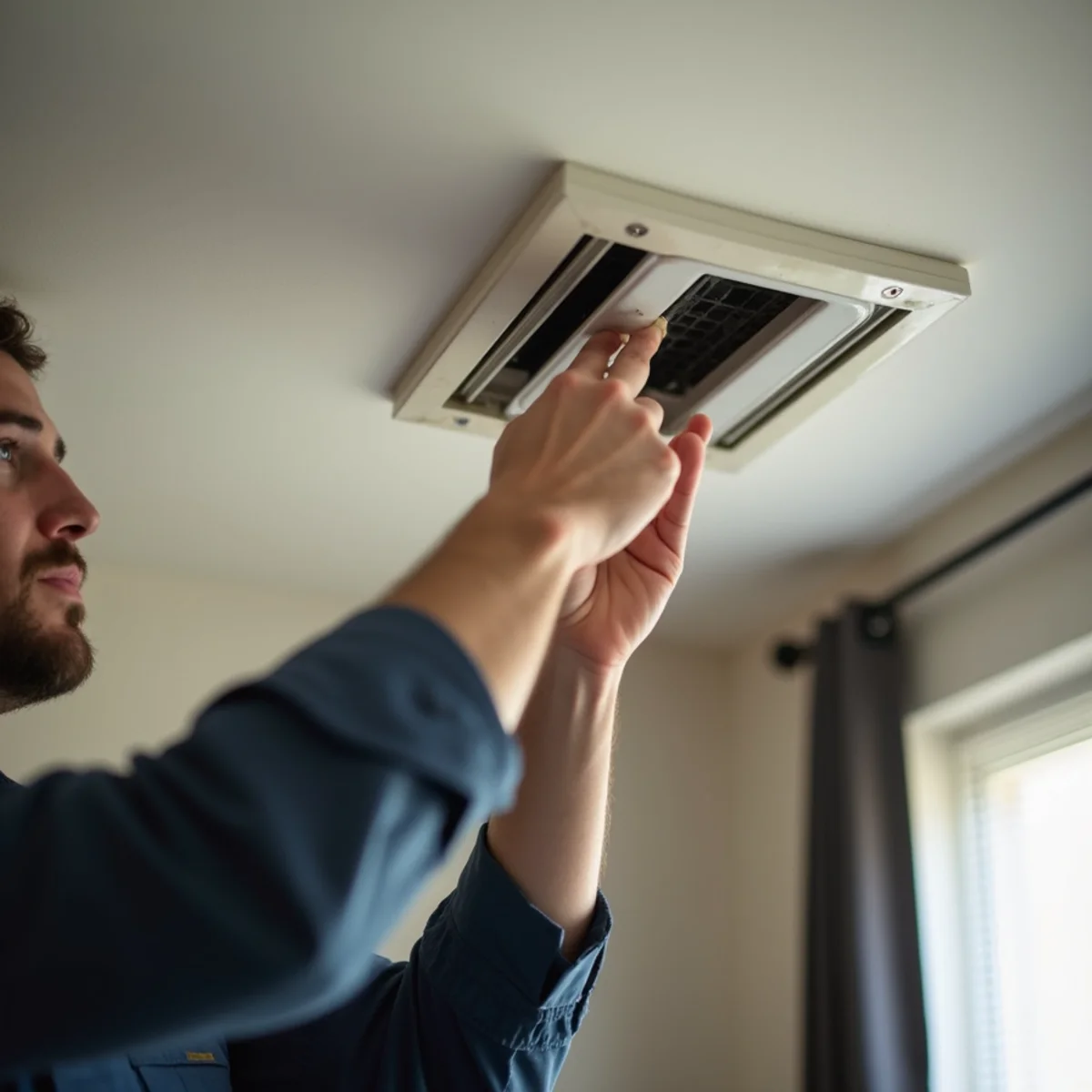
A dust-choked, pet-dander-laden air filter is the single most common cause of sudden cooling failures in eastern North Carolina homes. When return air cannot pass through a clogged filter, the indoor evaporator coil cannot absorb heat from your indoor air.
Without adequate heat load, refrigerant inside the evaporator coil remains below 32°F, causing airborne humidity to freeze across the aluminum fins. Within a few hours, the entire coil encases itself in a solid block of ice, choking off airflow completely. If you haven't replaced your 1-inch pleated filter in the last 30 to 60 days—especially during spring pine pollen season—replace it immediately.
Technician Pro-Tip: How to Safely Thaw a Frozen Evaporator Coil
Never use a hair dryer or ice pick on a frozen coil—you will puncture the copper tubing or melt the plastic drain pan. Instead, turn the thermostat to 'OFF' and set the fan switch to 'ON.' This circulates warm indoor air over the ice block, melting it in 4 to 6 hours. Place old towels around the air handler cabinet in your closet, attic, or crawl space to catch condensate overflow.
3. Check Both Electrical Breakers (Indoor and Outdoor)
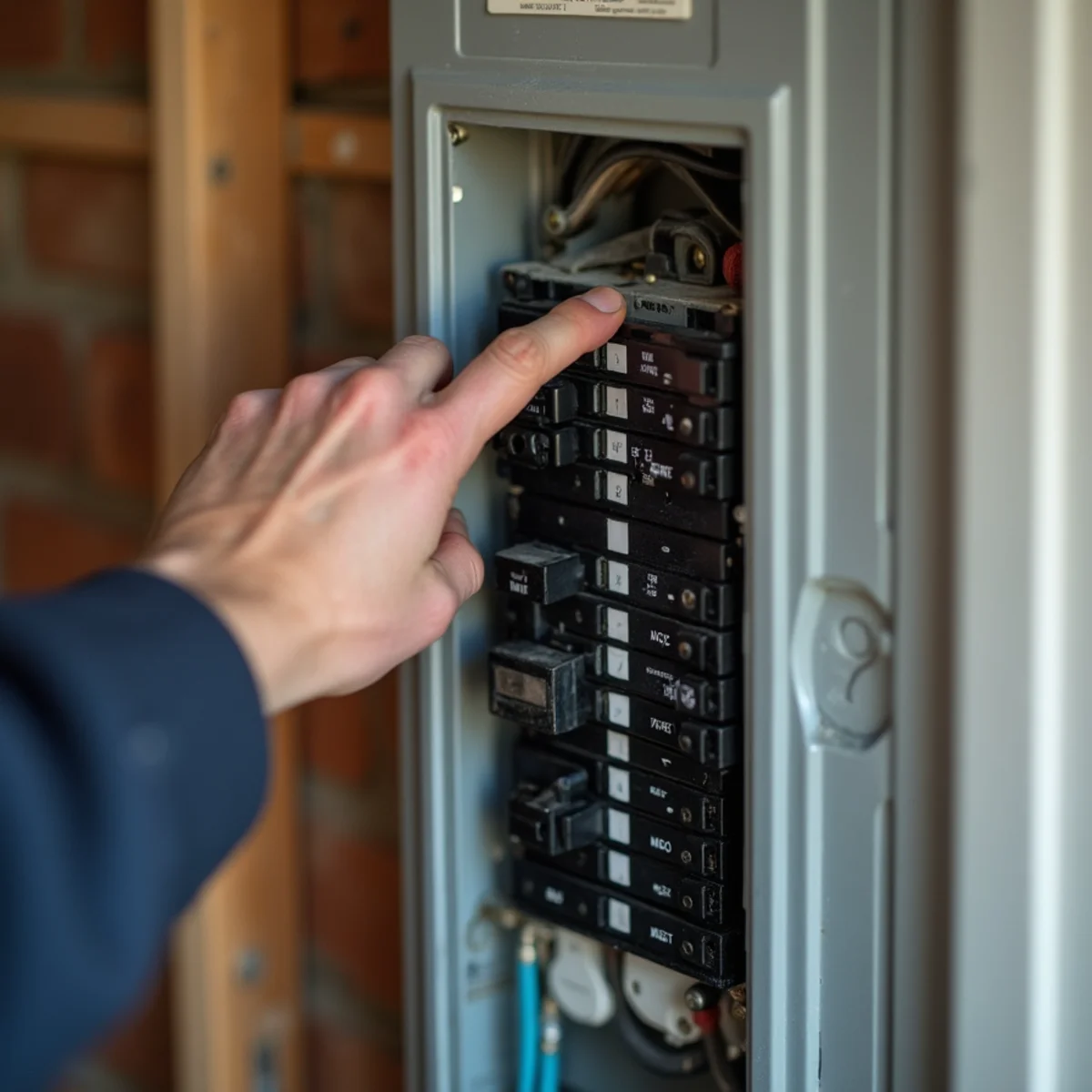
Central air conditioners and split-system heat pumps operate on two distinct 240-volt electrical circuits: one controlling the indoor air handler/furnace, and a separate high-amperage circuit feeding the outdoor condensing unit. When a sudden lightning strike, utility surge, or failing run capacitor overloads the outdoor circuit, its breaker will trip while the indoor unit keeps running.
This leaves the indoor fan blowing room-temperature air because the outdoor compressor and condenser fan motor are completely dead. Locate your main electrical service panel and look for a double-pole breaker marked 'AC,' 'Condenser,' or 'Heat Pump.' If the breaker handle is resting in the middle tripped position, firmly push it to 'OFF' until it clicks, then snap it back to 'ON.'
- Locate the dedicated double-pole 30A to 50A breaker labeled 'AC' or 'HP.'
- Reset a tripped breaker by pushing firmly to 'OFF' before flipping to 'ON.'
- CRITICAL SAFETY WARNING: If the breaker trips a second time immediately, do NOT reset it again. Repeated tripping indicates an electrical dead short or grounded compressor that can spark an electrical fire.
Need an HVAC Specialist in Dunn, NC?
4. Check the Condensate Drain Line and Safety Float Switch
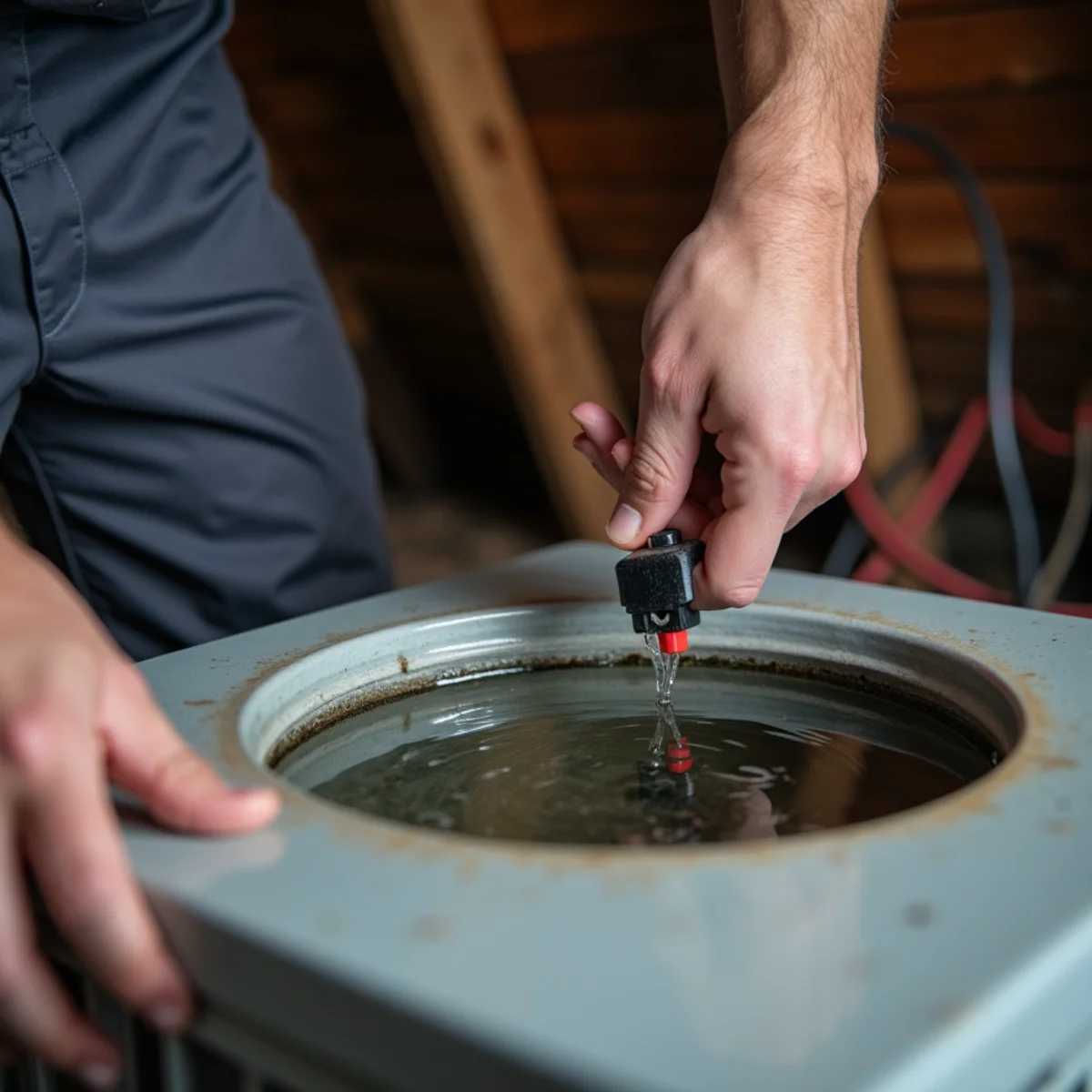
In Dunn's humid climate, your air conditioner removes anywhere from 10 to 20 gallons of water vapor from your home every day. That water collects in the indoor coil drain pan and drains outside through a 3/4-inch white PVC line.
Over months of operation, algae, microbial slime, and dust combine into a gelatinous plug inside the drain trap. When water backs up in the pan, a magnetic float safety switch (such as an EZ-Trap or Safe-T-Switch) activates, cutting the 24-volt control signal to the outdoor condenser or thermostat to protect ceilings and floors from catastrophic water damage.
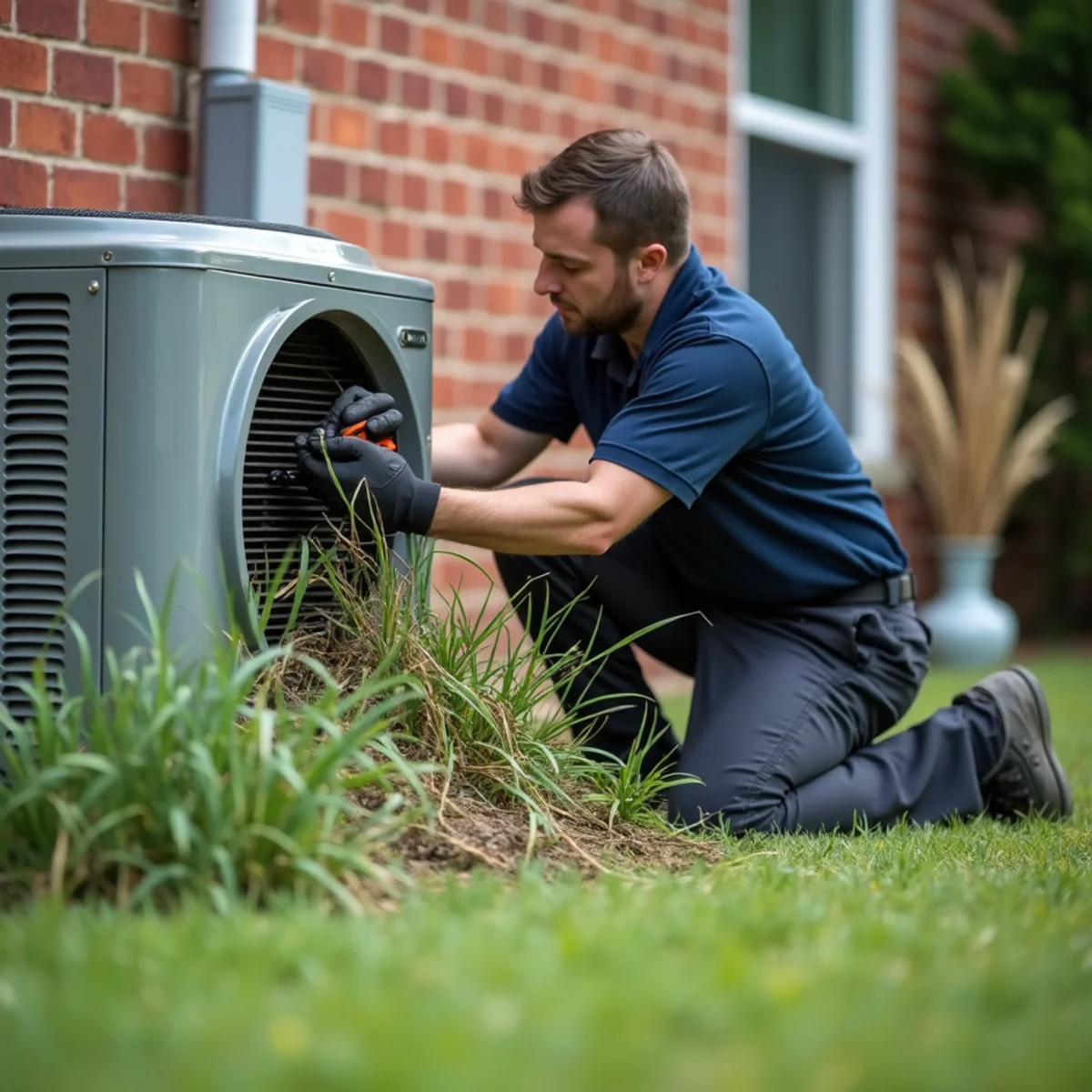
5. Inspect the Outdoor Condenser for Airflow Restrictions
Your outdoor condenser rejects heat extracted from your living room out into the atmosphere. To do this efficiently, the condenser fan pulls hundreds of cubic feet of air per minute through aluminum micro-channel or copper-fin coils. When fallen pine needles, grass clippings from mowing, or overgrown bushes choke the coil, heat remains trapped inside the refrigerant circuit.
As head pressure spikes, the compressor's internal thermal overload switch trips to prevent mechanical burnout, leaving the system blowing unchilled air.
6. Check the Outdoor Disconnect Box and Pullout Handle
Within arm's reach of your outdoor condenser is a weatherproof metal electrical box known as the service disconnect. Inside is either a pull-out cartridge containing cartridge fuses or a heavy-duty toggle switch. Landscapers, weed trimmers, or contractors working on siding can accidentally dislodge the handle, cutting all power to the outdoor compressor.
Ensure the disconnect box is closed, the pull-out handle is firmly seated in the 'ON' position, and inspect for blown cartridge fuses if you possess a digital multimeter.
7. Diagnostic Decision Guide: When to Call for Licensed Repair
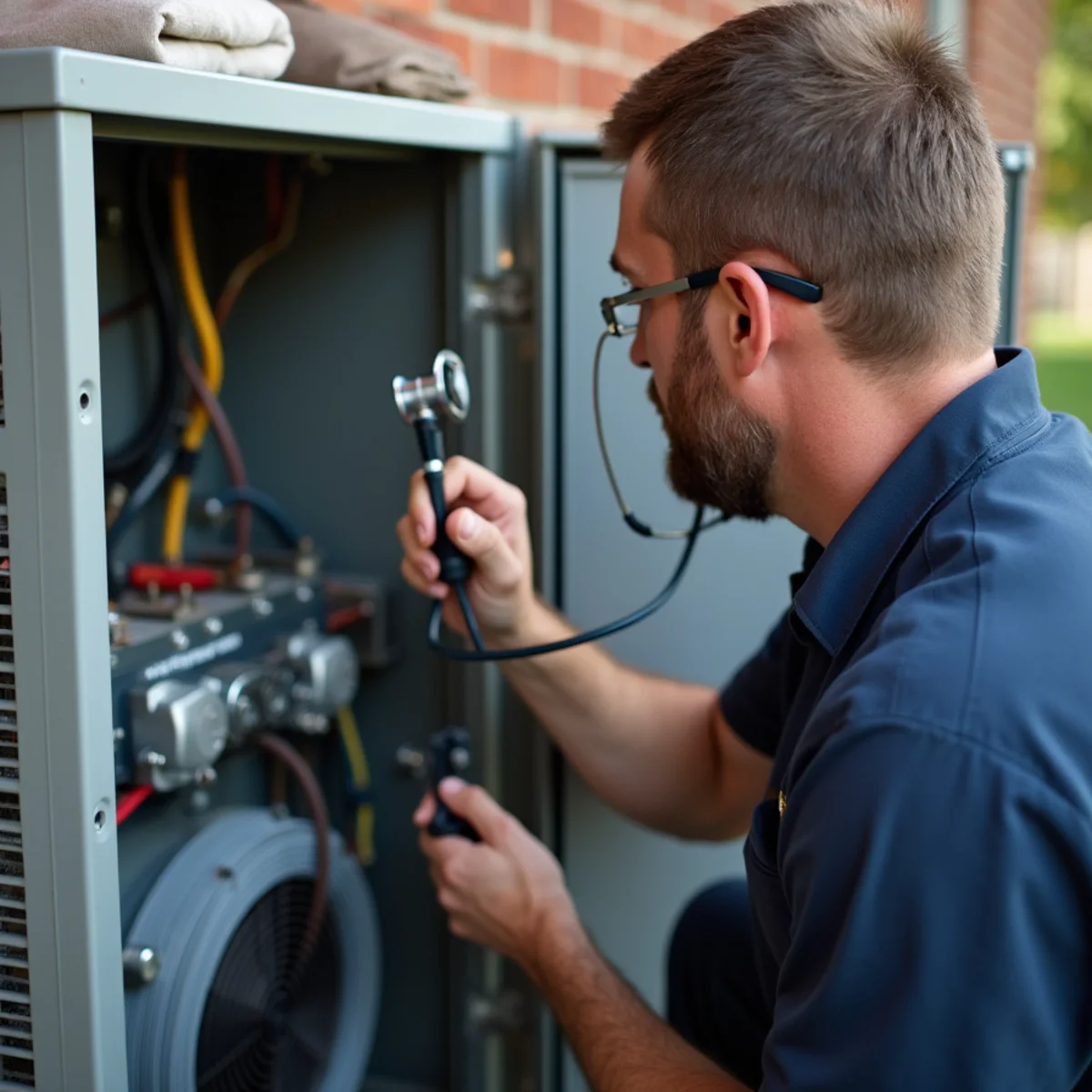
If you have verified clean filters, confirmed breaker continuity, cleared the condensate line, and inspected the outdoor unit, but your supply vents still register warm air, your system requires professional diagnostic testing. The table below outlines common symptoms, their underlying causes, and whether they can be resolved safely at home or require a licensed technician.
Expert Insight: The 20-Degree Delta-T Cooling Test
To determine if your air conditioner is performing correctly, use a digital meat or probe thermometer. Measure the temperature of the air entering your main return air grille, then measure the temperature coming directly out of the nearest supply register. A healthy, properly charged system produces a temperature drop (Delta-T) between 16°F and 21°F. If your temperature drop is under 12°F, your system is suffering from low refrigerant, dirty coils, or severe duct leakage.
| Observed Symptom | Probable Root Cause | Safe Homeowner Check | Professional Resolution |
|---|---|---|---|
| Indoor fan blows warm air; outdoor unit completely silent | Tripped breaker, blown capacitor, or float switch trip | Check breaker panel and drain pan water level | Test 240V contactor, dual run capacitor, or replace float switch |
| Outdoor fan spins, but compressor emits humming buzz without starting | Weak or failed dual run capacitor (under capacitance) | Listen for 10-second hum cycles at the condenser | Discharge and install OEM-rated dual run capacitor |
| Frost or ice coating copper suction pipe or indoor coil | Airflow restriction or low refrigerant (leak) | Replace air filter; verify all supply registers are open | Perform electronic leak detection and repair coil pinholes |
| Outdoor condenser cycles on and off every 3 to 5 minutes | High head pressure or low refrigerant pressure lockout | Wash exterior coil fins gently with a garden hose | Check superheat/subcooling and clear thermostatic expansion valve |
| Thermostat screen is completely blank and dark | Blown 3A/5A low-voltage fuse on control board or float trip | Replace thermostat batteries if applicable | Diagnose 24V transformer short and clear condensate obstruction |
Related Services & Service Areas
Related HVAC Services
Nearby Communities Served
Frequently Asked Questions
Common inquiries related to this guide.
If your thermostat fan setting is set to 'ON', the indoor blower fan runs continuously 24 hours a day even when the outdoor compressor has shut down. Switch the setting to 'AUTO'. If the fan is on 'AUTO' and the air is still warm, your outdoor compressor or dual run capacitor has likely failed, or a safety float switch has cut power to the condensing unit.
Not urgent? Send a request
Planning a replacement or seasonal tune-up? Fill out the form below. For the fastest help, call (321) 478-0693.