
HVAC After a Flood or Hurricane: What to Check Before You Switch It Back On
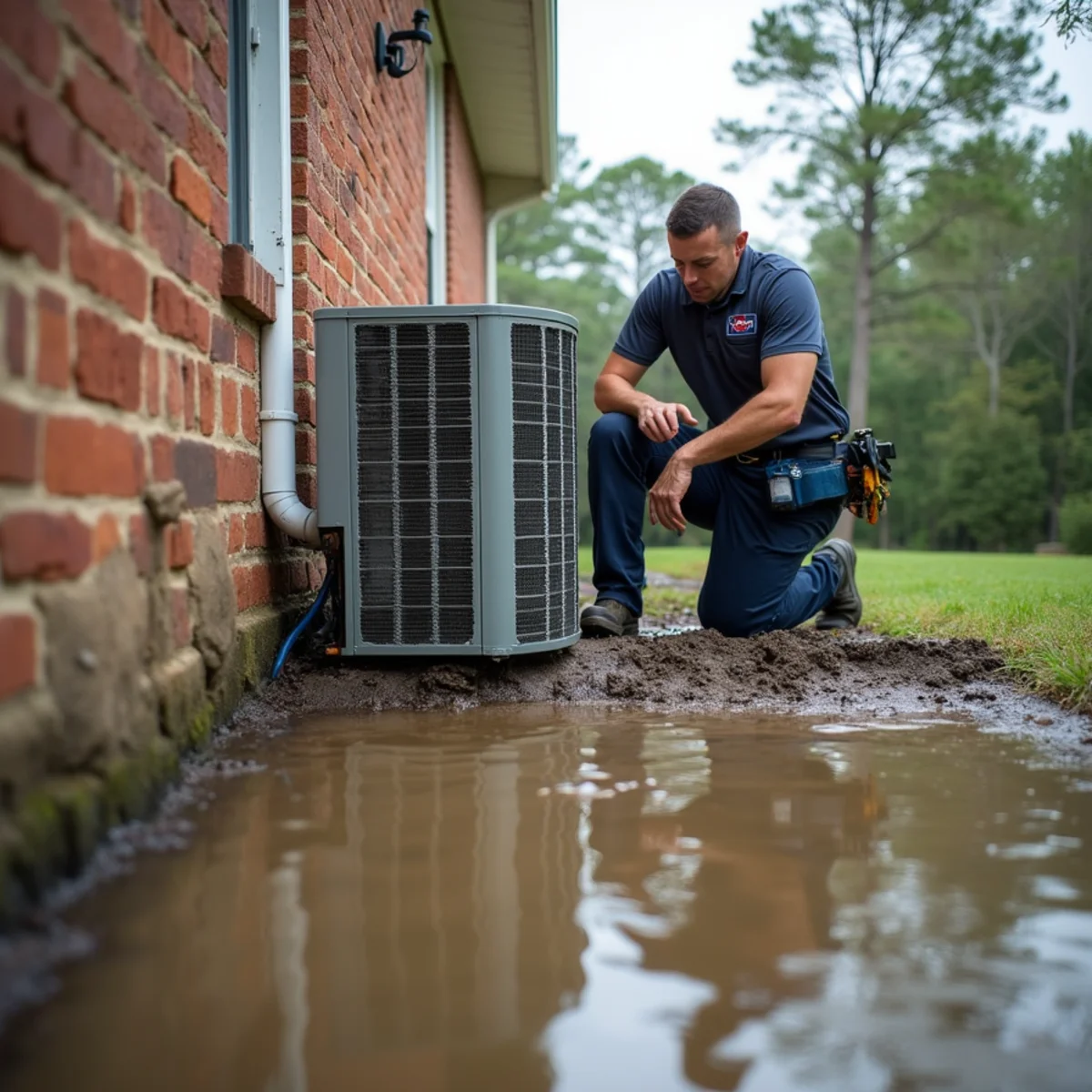
Hurricane Flood Realities Across the Cape Fear and Neuse River Basins
Eastern North Carolina has weathered severe tropical systems, from Hurricanes Matthew and Florence to torrential seasonal flash flooding. Communities along the Cape Fear River basin (Erwin, Lillington) and the Neuse River basin (Smithfield) frequently see river levels surge, inundating outdoor condenser slabs and filling residential crawl spaces with muddy, silt-laden water.
When floodwaters enter heating and air conditioning components, the damage is fundamentally different from a simple rain shower. Floodwaters carry dissolved minerals, sewage runoff, road grime, and fine clay sediment that penetrate hermetic electrical connections, corrode aluminum fins, and ruin insulation.
HVAC Flood Damage Assessment Matrix: Component by Component
Before attempting cleanup or submitting claims to insurance adjusters or FEMA, understand the specific recovery protocol for each primary HVAC component.
| Equipment Component | Water Exposure Level | Mechanical Risk / Impact | Mandatory Action / Repair Protocol |
|---|---|---|---|
| Outdoor Condenser Fan Motor | Splashed by rain / puddling | Bearings may dry out; wiring intact | Wash with clean water, spin motor by hand, test capacitor |
| Outdoor Compressor & Contactor | Submerged over 12 inches | Silt in electrical box; terminal shorting | Power MUST stay off. Megohmmeter insulation resistance test |
| Crawl Space Horizontal Air Handler | Water entered bottom cabinet | Transformer, control board, blower short | Replace 24V board, ECM motor, and sanitize cabinet |
| Flexible Underfloor Ductwork | Submerged or touching water | Fiberglass saturated with sewage / silt | Total removal and replacement. Cannot be dried or sanitized |
| Gas Furnace Burners & Gas Valve | Water reached gas train | Corrosion inside safety shutoff solenoid | Gas valve MUST be replaced by law; severe explosion risk |
| Thermostat & Low-Voltage Wiring | Underfloor wiring submerged | Capillary water migration into conductors | Inspect 18-gauge wire harness for shorts and corrosion |
Crucial Safety Protocol: Why You Must Never Turn Power On While Wet
The most common mistake homeowners make after a hurricane storm surge is flipping the electrical breaker back on the moment water begins receding. Doing so often destroys thousands of dollars of equipment that could otherwise have been salvaged:
- Electrical Arcing and Explosive Shorts: Wet 240-volt contactors and terminal blocks will arc violently across phases, welding contacts together and destroying the main circuit breaker.
- Motor Winding Breakdown: Water inside motor windings strips the thin varnish insulation off copper coils, turning the motor into a dead short circuit.
- Chemical Corrosion: Flood silt contains corrosive salts and acids that eat away at solder joints and delicate microprocessor circuits within 48 to 72 hours if not promptly flushed and neutralized with electrical contact cleaner.
Technician E-E-A-T Field Testing: The Megohmmeter (Megger) Insulation Test
When Averasboro Heating & Air responds to flooded properties in Smithfield and Dunn, our licensed technicians never rely on a basic multimeter to test submerged compressors. We use a high-voltage Megohmmeter injecting 500V to 1,000V DC into the compressor windings to measure insulation resistance to ground. A healthy motor reads 100+ Megohms. Any reading below 20 Megohms indicates water has penetrated the stator windings, and powering the unit on will cause catastrophic motor grounding.
Need an HVAC Specialist in Dunn, NC?
Why Flood-Submerged Flexible Ductwork Cannot Be Sanitized
Some restoration companies attempt to spray disinfectant inside flooded flex ducts and blow warm air to dry them out. This is a severe health violation under North Carolina indoor air quality standards.
Flexible ductwork consists of a coiled helical wire enclosed in a perforated inner polyester core, surrounded by thick fiberglass insulation and a thin vapor jacket. When floodwater reaches underfloor duct runs, the porous fiberglass acts as a sponge, trapping muddy silt, septic bacterial runoff, and organic matter deep inside the insulation blanket.
Once the blower turns on, this contaminated air is aerosolized directly into bedrooms and living spaces, creating an extreme risk of mold sickness and respiratory infections. Submerged flex ductwork must be cleanly detached, bagged, disposed of, and replaced with code-compliant R-8 insulated lines.
Documenting Damage for Insurance, NFIP, and FEMA Claims
Navigating homeowners insurance, National Flood Insurance Program (NFIP) policies, and FEMA disaster grants requires meticulous photographic documentation:
- Photograph the High-Water Mark: Take clear photos showing the mud line or water watermark on the exterior condenser casing and indoor air handler cabinet.
- Capture Data Plates: Take macro photos of the model and serial number rating plates on all indoor and outdoor equipment.
- Get an Official HVAC Diagnostic Report: Insurance adjusters require a written evaluation from an NC-licensed mechanical contractor stating whether equipment is repairable or a total loss.
Related Services & Service Areas
Related HVAC Services
Nearby Communities Served
Frequently Asked Questions
Common inquiries related to this guide.
Yes, if floodwaters only covered the bottom 3 to 6 inches of the concrete pad and did not submerge the electrical service compartment, compressor terminal plugs, or fan motor. A licensed technician can pressure-wash sediment from the condenser coil, sanitize the base pan, lubricate fan bearings, and test electrical windings before safely restarting.
Not urgent? Send a request
Planning a replacement or seasonal tune-up? Fill out the form below. For the fastest help, call (321) 478-0693.