
Spring HVAC Tune-Up Checklist for Eastern North Carolina Homeowners
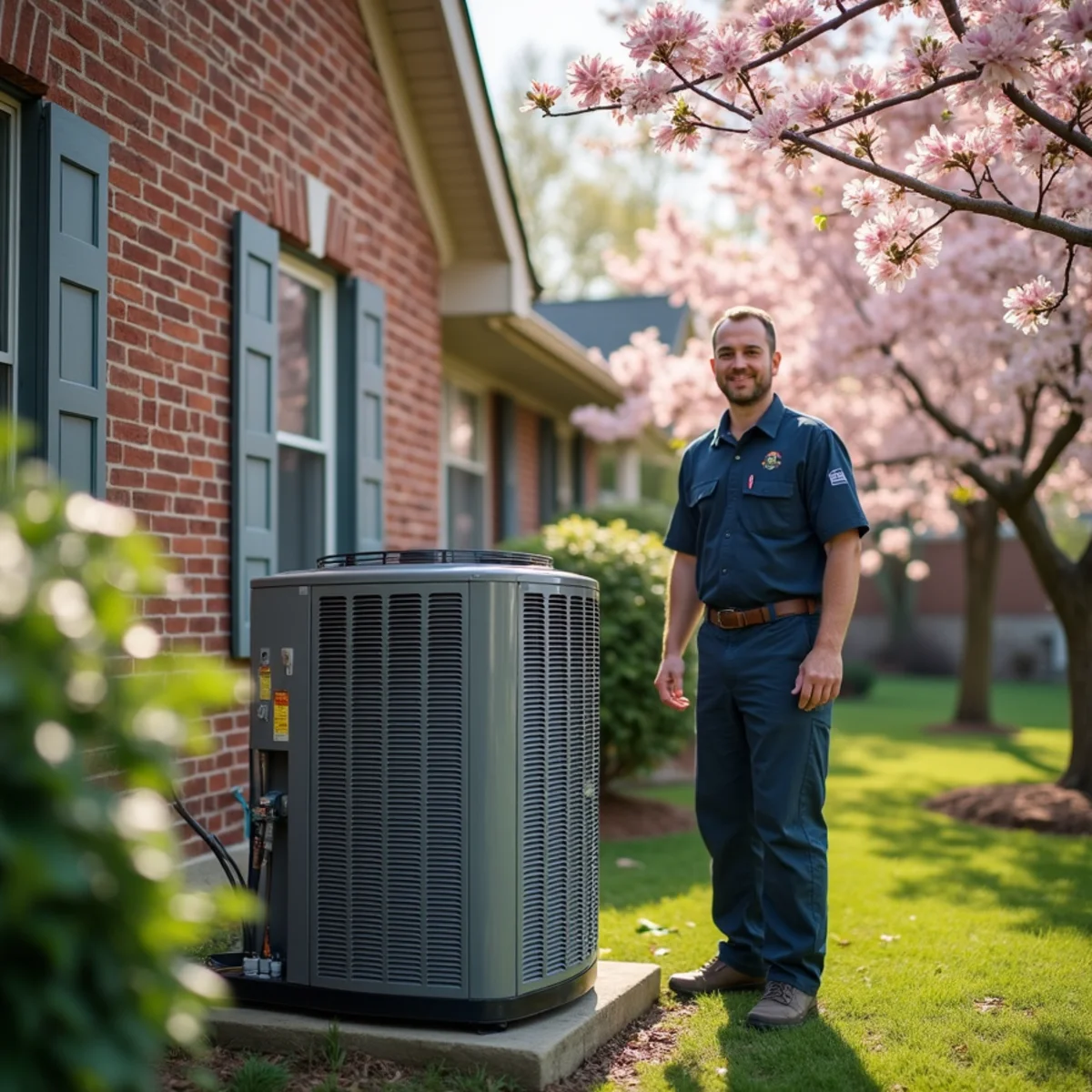
The Eastern NC Spring Challenge: Loblolly Pine Pollen & Sudden Humidity Spikes
Spring in Harnett and Johnston counties brings blooming azaleas and pleasant daytime temperatures, but it also unleashes a massive botanical assault on residential cooling equipment. Eastern North Carolina is home to dense forests of loblolly pines, which release microscopic, neon-yellow pollen granules by the billions between late March and early May.
When loblolly pine pollen coats outdoor air conditioning condensers, it combines with heavy morning dew to create an adhesive, insulating crust across delicate aluminum coil fins. This mat traps heat inside the refrigerant coils, restricting airflow and forcing compressor discharge pressures to climb 30 to 50 PSI higher than normal. Unchecked pollen buildup leads to elevated electrical consumption, poor indoor dehumidification, and premature compressor overheating just as early summer heat arrives.
- Airflow Starvation: A 1/16-inch blanket of pine pollen and roadway dust can reduce outdoor condenser airflow by up to 25%, drastically diminishing the system's ability to reject heat.
- Elevated Head Pressure: High condenser head pressures force the compressor motor to draw excessive amperage, raising utility bills and accelerating internal mechanical wear.
- Shoulder Season Cycling: Spring weather in Dunn frequently fluctuates from 45°F overnight lows to 82°F afternoon highs, putting severe thermal cycling stress on electrical capacitors, contactor points, and reversing valves.
The Complete 21-Point Spring HVAC Precision Tune-Up Checklist
A successful spring tune-up combines routine homeowner DIY care with comprehensive professional testing by licensed HVAC technicians:
| Maintenance Task | Recommended Performer | Target Frequency | System Performance & Longevity Benefit |
|---|---|---|---|
| Wash Outdoor Condenser Coils | Homeowner / Technician | April & June | Restores airflow and reduces compressor head pressure |
| Clear 24" Landscape Vegetation | Homeowner | Monthly in Spring | Prevents condenser hot-air recirculation around pad |
| Replace Return Air Filters | Homeowner | Every 30–60 Days | Protects indoor A-coil from lint, dust, and pollen crust |
| Flush Condensate Drain Line | Homeowner / Technician | Monthly during Cooling | Prevents algae clogs and water backup in ceiling/closet |
| Test Dual Run Capacitor (μF) | Licensed Technician | Annually in Spring | Identifies weak capacitors before total compressor startup failure |
| Inspect Contactor Silver Points | Licensed Technician | Annually in Spring | Prevents electrical arcing, ant infestation, and stuck contacts |
| Measure Refrigerant Subcooling | Licensed Technician | Annually in Spring | Verifies exact factory charge for maximum EER efficiency |
| Measure Delta-T Temperature Split | Licensed Technician | Annually in Spring | Confirms 16°–20°F cooling split between return and supply |
Essential DIY Spring Tasks for Dunn & Benson Homeowners
Homeowners can complete several crucial maintenance steps each March and April using basic household tools to ensure their systems run smoothly:
- Step 1: Wash Winter Grime and Pine Pollen from Outdoor Coils. Turn off power at the outdoor disconnect switch. Use a gentle garden hose nozzle directed at a 45-degree downward angle to wash yellow pollen, dirt, and dead foliage out of the aluminum fins. Never use a high-pressure washer, which will bend and crush the fins.
- Step 2: Clear 24 Inches of Clearance Around the Unit. Trim back overgrown azaleas, climbing jasmine, tall grasses, and invasive vines. Your heat pump requires at least two feet of unobstructed breathing space on all four sides and five feet above the top discharge fan.
- Step 3: Replace Pleated Return Air Filters. Inspect your indoor return grilles. Install fresh pleated filters rated MERV 8 to MERV 11 before running the air conditioner continuously. Ensure grilles are not blocked by rugs or heavy living room furniture.
- Step 4: Test Run the System on a Mild April Afternoon. Don't wait for a 95°F June heatwave to discover your system is malfunctioning. Choose a sunny 75°F afternoon, switch the thermostat to 'COOL' at 70°F, and let the system run for 20 minutes to verify brisk, chilled air delivery and condensate drainage.
Need an HVAC Specialist in Dunn, NC?
Step 1: Wash Winter Grime and Pine Pollen from Outdoor Coils
Pine pollen and blown leaves form a dense mat against the aluminum fins of your outdoor condenser. This mat acts like a winter blanket, trapping heat and forcing your compressor to work at dangerously high head pressures.
Turn off power at the outdoor disconnect box and gently wash the coil fins from top to bottom using a garden hose with a spray nozzle. Never use a high-pressure pressure washer, which will instantly bend the delicate aluminum fins.
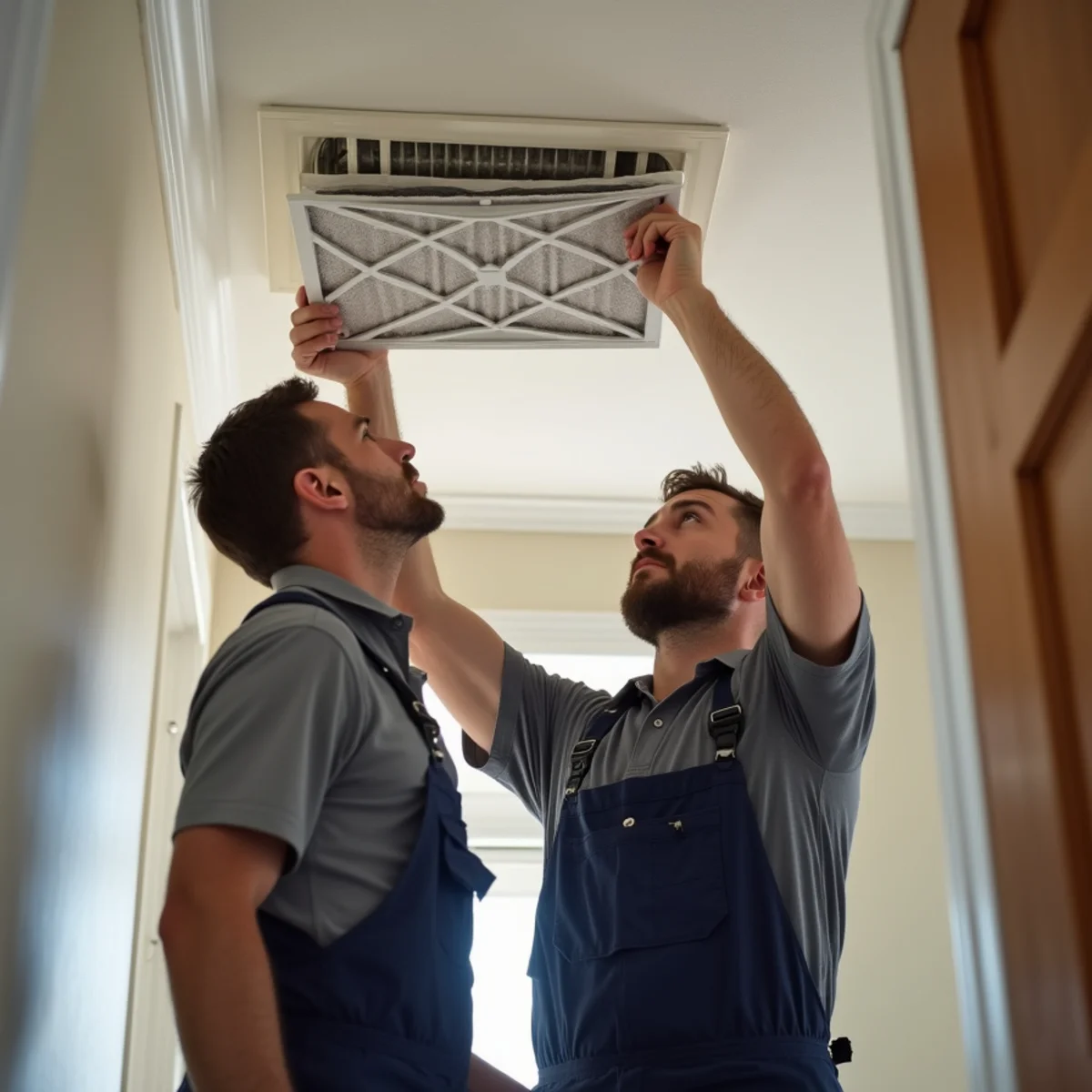
Step 2: Clear 24 Inches of Clearance Around the Unit
Trim back encroaching shrubbery, azaleas, and tall grass around your outdoor pad. Your condenser needs at least two feet of clear airflow around all sides and five feet above to expel heat efficiently.
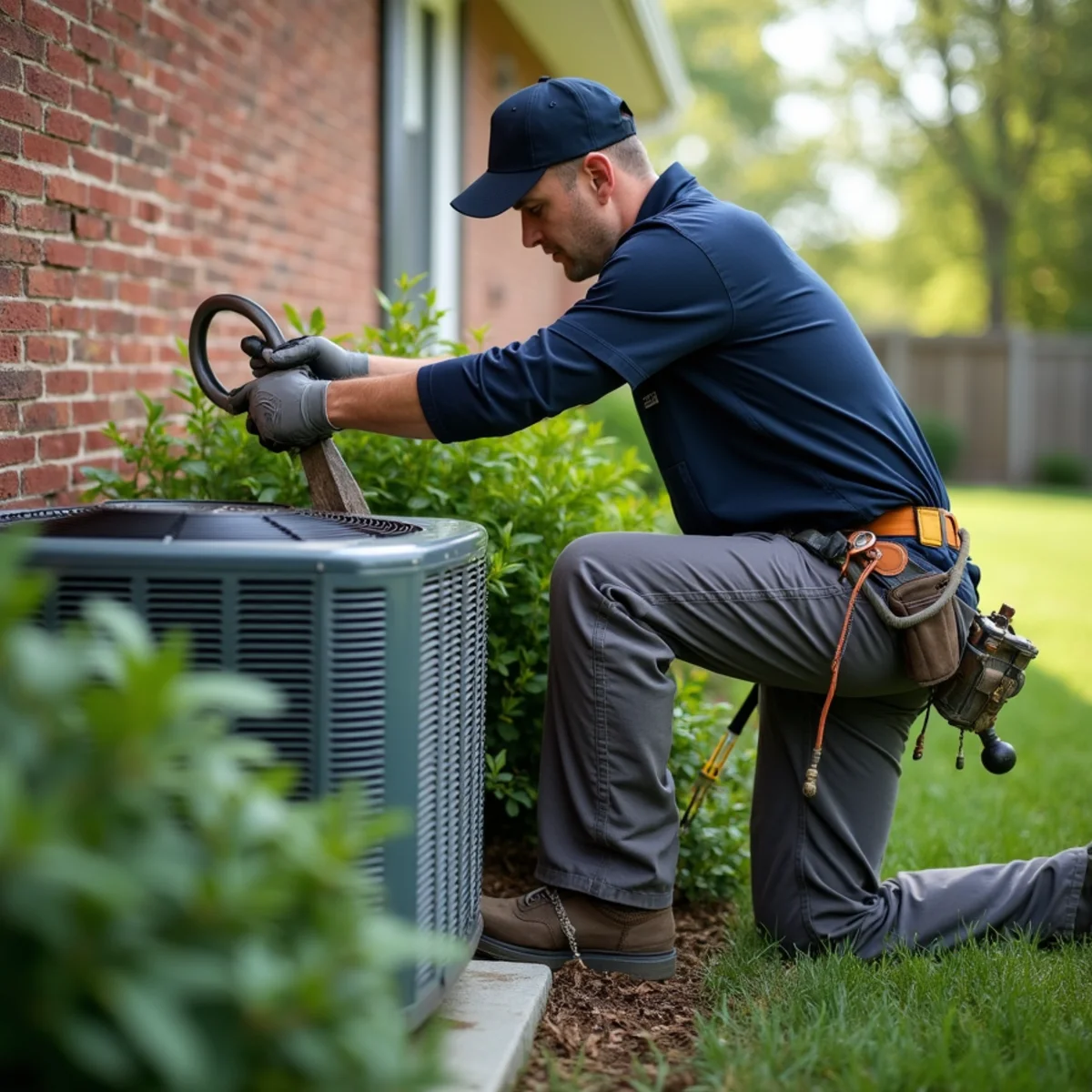
Step 3: Replace Filters and Check Return Grilles
Inspect your return air filter. Replace standard 1-inch pleated filters every 30 to 60 days during heavy pollen season. Ensure return grilles are not blocked by furniture or rugs.

Step 4: Test Run the System in April
Don't wait for a 95°F heat wave in June to discover your AC isn't cooling. Pick a mild 78°F afternoon in April, set your thermostat to 'COOL' at 72°F, and let the system run for 20 minutes. Verify cold air is blowing, the outdoor fan is spinning smoothly, and water is draining from the condensate pipe.

What Licensed Technicians Inspect During Professional Precision Tune-Ups
While homeowners can keep coils rinsed and filters clean, critical electrical, electronic, and thermodynamic components require professional testing by licensed HVAC technicians:
Electrical Integrity & Fire Safety: Technicians test dual run capacitors with a digital multimeter to measure capacitance against the manufacturer's rated microfarad (μF) specification. Capacitors losing more than 5% capacitance struggle to start compressor and fan motors under hot summer loads, resulting in sudden capacitor blowout.
Contactor Points & Bug Intrusion: In Eastern North Carolina, tiny crazy ants and earwigs are attracted to the electromagnetic warmth of AC contactors. Technicians inspect the silver electrical contact surfaces for bug debris and arcing pits, smoothing or replacing contacts before they weld shut and run compressors continuously until burnout.
Condensate Trap Clearing & Safety Float Switches: Technicians blow out primary condensate drain lines using high-pressure nitrogen gas, dissolving biological algae and mineral scale. They also inspect secondary overflow drain pans and test electronic water float switches that automatically shut down cooling before attic or closet water damage occurs.
Field Diagnostic: Calibrating Subcooling & Superheat in Mild Spring Temperatures
Accurately checking refrigerant charge during mild 70°F spring weather requires advanced thermodynamic calculations. On systems equipped with Thermal Expansion Valves (TXV), our technicians calculate subcooling by measuring high-side liquid line pressure and temperature. On fixed-orifice piston systems, we measure indoor wet-bulb and outdoor dry-bulb temperatures to determine target superheat. Technicians who attempt to charge refrigerant by 'beer-can cold' suction lines or simple pressure gauges without subcooling calculations almost always overcharge the system, causing liquid refrigerant floodback and catastrophic compressor destruction once 95°F summer heat arrives.
Related Services & Service Areas
Related HVAC Services
Nearby Communities Served
Frequently Asked Questions
Common inquiries related to this guide.
March and April are the ideal months to schedule your spring cooling tune-up. Scheduling early ensures your system is thoroughly tested and optimized before the first summer heatwave strikes, while allowing flexible technician appointment availability before the peak emergency season.
Not urgent? Send a request
Planning a replacement or seasonal tune-up? Fill out the form below. For the fastest help, call (321) 478-0693.